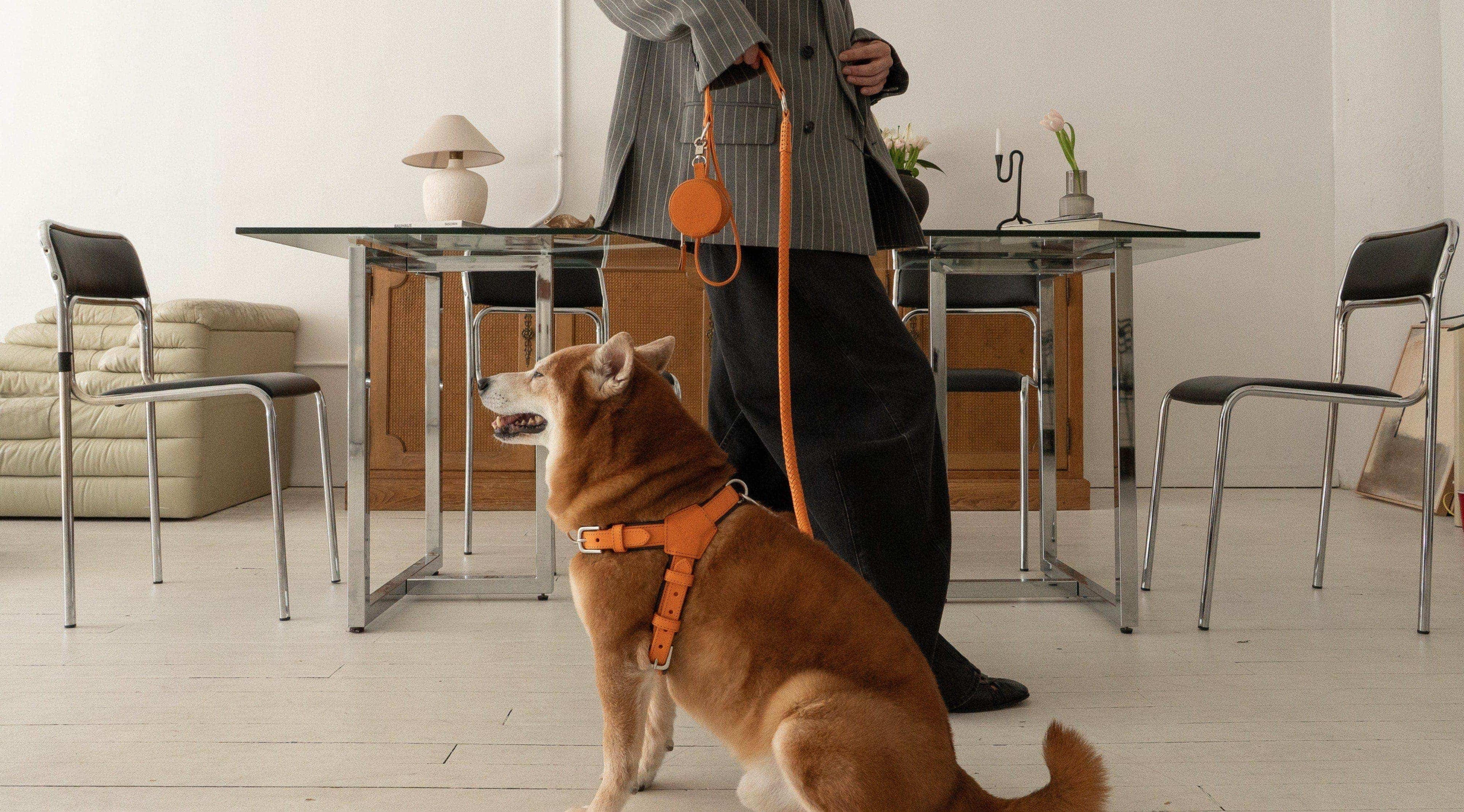


A closer look at material choice, longevity, and what actually lasts.
Short answer: Yes—when sourced and crafted properly, genuine vegetable-tanned leather lasts longer, performs better under daily use, and ages gracefully over time. That’s why it remains a trusted material for dog accessories designed to be worn every day, not just looked at.
Choosing a collar, harness, or leash is less about style than it seems.
Dog accessories are used every day. They’re pulled, bent, and exposed to weather. A leash is wrapped around the hand at crosswalks. A collar is taken on and off in the morning and at night. A harness absorbs tension with every step. Over time, the wrong material stretches or weakens. The right one settles in, softens, and becomes more dependable with age.
At SHIBA & Co, every design starts with one question: How will this feel and function after years, not weeks?
That question leads us back to leather—specifically, vegetable-tanned calf leather sourced in Italy. We use it for the Milano Harness, Lucca Collar, and Otto Leash for one simple reason: it holds up. Quietly, consistently, and for the long term.
What Makes Genuine Leather Different?

Genuine leather starts as natural hide that’s been tanned and finished. Vegetable tanning uses plant-derived tannins rather than harsh chemicals. The result is a leather that’s strong, breathable, and can age for 10–25+ years with care.
This type of leather doesn’t just wear in, it develops a subtle patina — a soft surface and rich depth of color that improves with handling and time. For gear that’s pulled on, carried, and held every day, this quality matters.
Because most synthetic “leather” alternatives are plastic-based (like PVC and PU), they don’t age the same way and can crack or peel with wear — a point noted by Rachel from Vogue’s fashion coverage of plant-based leathers and their limitations.
Longevity As A Form Of Sustainability
Sustainability is often discussed in terms of production inputs. We also think about what happens after a product enters someone’s life. There are discussions from Business Of Fashion (BOF) around sustainability, focusing on initial production, but another important factor is how long a product lasts. A dog collar or leash that holds up well over time means fewer replacements — and less waste. In that sense, durability becomes a form of sustainability.
Using vegetable-tanned leather responsibly also connects to traditional craftsmanship. Italian leather producers in Tuscany, for example, have refined these techniques over generations — prioritizing material strength and natural aging rather than mass production. The care taken at the tannery level shows up in the everyday use of the finished accessory.

A Gentle Clarification On Common Misconceptions
It’s easy to assume that vegan or faux leather is automatically “greener,” but sustainability isn’t a simple binary. Many commonly used alternatives are petroleum-based, made from plastics like PVC and polyurethane, and don’t biodegrade the way natural materials do. Because these synthetics are often designed for short-term fashion use, they can crack or peel more quickly, leading to earlier replacement and more waste over time—even if no animal material is involved.
At the same time, material innovation is evolving. Plant-derived leathers show promise, but many are still early in adoption and often blended with synthetics to achieve durability.
This isn’t about judging material choices. It’s about understanding how a material performs in real life, especially for accessories meant to be used—and loved—for years.
How This Choice Shows Up In Our Accessories

We design accessories around the strengths of the material, not the other way around.
Milano Harness – Vegetable-tanned leather holds its structure while softening where it meets your dog’s shoulder and chest. The result: a harness that feels reliable and comfortable even after many walks.
Lucca Collar – Simple, clean, and strong. Leather naturally molds to shape over time, making it feel more custom and soft without losing strength.
Otto Leash – Hand-woven leather offers grip and texture that purely synthetic leashes struggle to replicate. As it’s used, it becomes easier to hold and less stiff than most nylon alternatives.
These accessories are built around the idea that the material’s inherent qualities should serve everyday life, not just look good in a product photo.
Choosing With Confidence
If you’re deciding between materials, the question isn’t which one looks best on day one.
It’s which one still works—and still feels right—years later.
For us, genuine vegetable-tanned leather is the answer.